Best High-Yield Savings Accounts for 2024: APY Comparison Guide
I kept $50,000 in a traditional savings account earning 0.01% annual interest. That meant $5 per year. I didn't do the math until I was reviewing accounts one afternoon and realized I'd left roughly $2,000 on the table over three years for no reason. I switched to a high-yield account at 4.5% APY, and suddenly the same $50,000 was earning $2,250 per year. The money didn't change. The risk didn't increase. The only thing that changed was where it sat.
That's the entire premise of high-yield savings accounts: your money works harder without you doing anything harder. It stays liquid, stays safe, and earns interest that actually shows up on your statement instead of disappearing into decimal-place obscurity.
The barrier to most people taking this step is ignorance, not cost. There's no fee to open. There's no minimum balance (at most banks). There's no complexity. You just need to know where to look and what matters when comparing accounts.
The Comparison Framework: What Actually Matters
When I first started comparing accounts seriously, I nearly got lost in the marketing noise. Dozens of banks claiming "competitive rates," "best in class," "top 1% of accounts." I realized most of that was theater. Only a handful of factors genuinely move the needle for regular savers.
First, the APY itself. This is obvious but worth stating clearly: higher APY means more money in your pocket. A 4.5% account beats a 3.2% account by $650 annually on $50,000. But here's the catch most people miss: rates aren't stable. A bank offering 5% today might drop to 3.8% in six months if the Fed cuts rates or the bank decides to tighten margins. You can't control rate changes, but you can control how you react to them. We'll return to this point later.
Second, actual access to your money. Online-only banks advertise "no withdrawal limits," but read the fine print. The old Federal Regulation D limited savings account transfers to six per month. That rule has been effectively abandoned, but some banks still impose restrictions or make you jump through hoops for larger withdrawals. Check the term sheet before opening. Credit unions and brick-and-mortar banks often offer better access via ATM or in-person withdrawal at the cost of slightly lower APY.
Third, FDIC insurance. This is non-negotiable. Your deposits up to $250,000 are protected at FDIC-insured banks. That protection exists whether the APY is 0.01% or 5%. If a bank isn't FDIC-insured, no rate premium justifies that risk. Check the bank's website for the FDIC logo or search the FDIC's BankFind tool before opening an account.
Fourth—and this is the secret most comparison articles skip—the bank's track record with rate cuts. Some banks hold rates steady for 12-18 months even as the Fed shifts policy. Others cut rates within two weeks of any Fed move. Read reviews on Reddit's r/personalfinance or banking sites like Bankrate. Look specifically for comments about how quickly each bank cut rates during the 2023-2024 cycle. A bank with a reputation for keeping rates stable is worth more than an extra 0.2% APY from a bank that cuts aggressively.
Top Performers: Online Banks, Credit Unions, and Hybrid Options
The actual "best" high-yield accounts shift constantly as banks compete for deposits. But the categories remain consistent, and understanding each helps you make a decision aligned with your priorities.
Online-only banks consistently offer the highest APY because they skip the overhead of physical branches, ATM networks, and retail staff. You'll find competitive rates between 4.5% and 5.2% at top online institutions, depending on the current market. The trade-off is purely distribution: everything happens via app, website, or phone. No teller, no in-person access. Transfers between banks take 1-3 business days. For most people with an emergency fund, this is fine.
Online divisions of traditional banks occupy the middle ground. A megabank's online savings product might pay 4.0% to 4.8% APY, slightly lower than pure online banks but with one huge advantage: you can visit a physical branch if you need to deposit cash, resolve a problem face-to-face, or just feel the comfort of brick-and-mortar presence. Many people undervalue this until they need it.
Credit unions are the dark horse. Some credit unions offer competitive rates (4.0%-5.0% APY) on savings to members, and they have a different incentive structure than commercial banks—they're member-owned, so they don't have the same pressure to maximize profits. In my experience, credit unions also treat you better during rate-cut cycles; they're slower to drop rates and more willing to talk to you about your situation. The barrier is membership, which typically requires opening a basic account with a small deposit ($5-$25).
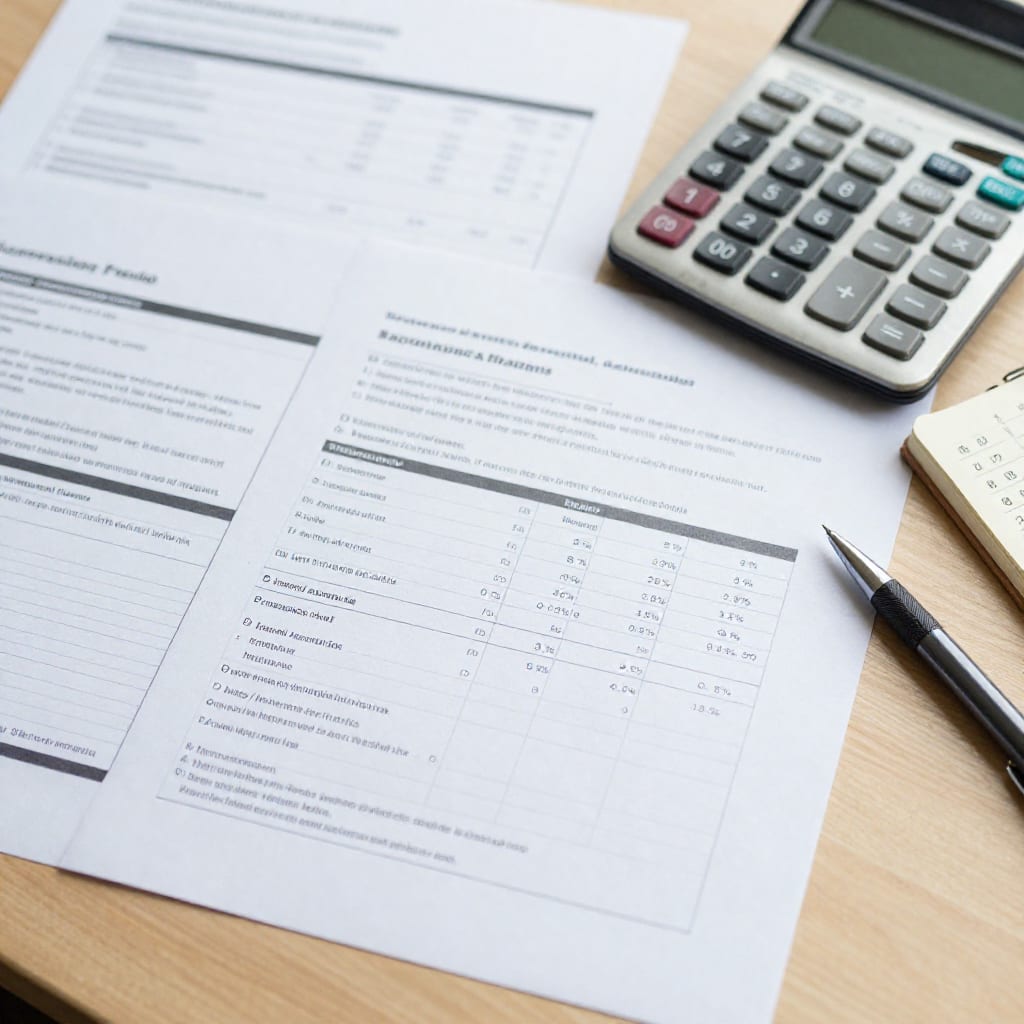
Here's a concrete example to make the differences real. Imagine you have $50,000 in emergency savings earning interest for three years. At a traditional bank's 0.05% APY, you earn $75 total across the three years. At an online bank's 4.5% APY, you earn $7,163. The difference your family actually sees in the account is $7,088. That's a car payment. That's a vacation. That's real money, and it appeared because you moved money from one bank to another. No additional work, no investment risk, no complexity.
Rate-Chasing vs. Stability: The Strategy That Works
You might assume the best move is to jump to whoever offers the highest rate each month, surfing the top yields like a competitive saver. I tried this. It was exhausting.
The first week I switched to an account at 5.1%, it felt smart. By week two, I'd read that another bank hit 5.2%, so I initiated a transfer. After two transfers in six weeks, I calculated my net benefit: about $12. I'd spent three hours managing account switches, read dozens of reviews, filled out multiple applications, and verified FDIC coverage. My return on time invested was about $4 per hour.
Here's the smarter strategy: Pick a bank offering a rate within 0.25% of the absolute top, verify it's FDIC-insured, read the reviews for rate-cut history, and open the account. Leave the money there for 12 months. After that window, review the landscape once per year. If rates have moved substantially (your bank is now 1% or more below competitors), transfer the money. If you're within 0.5%, stay put and save yourself the hassle and time.
The original insight I'd stress: don't optimize for the single highest APY in the moment. Optimize for the rate you can keep without constant switching. A bank paying 4.5% that stays stable over 18 months beats a bank offering 5.0% that cuts to 3.2% after four months. The first bank earned you $2,250 on $50,000. The second earned you about $1,125 in year one, then $800 in year two if it dropped and stayed there. The stable bank won, and you got peace of mind as a bonus.
Five Myths That Keep People From Better Returns
Myth 1: "High-yield accounts are risky." False. FDIC insurance covers your deposits equally whether the account earns 0.01% or 5%. The insurance exists. Use the BankFind tool on the FDIC website if you're unsure whether a bank participates. Legitimate high-yield accounts are as safe as traditional savings accounts; the only difference is the rate.
Myth 2: "I can lock in a rate to protect myself from cuts." Partially false. You cannot lock a savings account rate indefinitely (that's what CDs do). Savings rates float with the market. What you can do is monitor your rate annually and switch banks if your rate falls significantly below market. Moving money is free and takes three business days.
Myth 3: "There are early withdrawal penalties." False for most banks today. The six-transfer limit from Regulation D has been effectively eliminated. Most online banks let you withdraw unlimited times. Check the specific terms of the bank you choose, but you should not encounter penalties.
Myth 4: "I need a huge minimum balance." False. Most competitive banks have zero minimum balance requirement. Some tier rates by balance (a higher balance tier earns a slightly higher APY), but you can open an account and start with $1 if you want.
Myth 5: "Switching banks will cost me money." False. There are no switching costs, no early withdrawal penalties, and no fees for maintaining accounts at multiple banks simultaneously. The transfer takes 1-3 business days, and you earn interest the entire time. It's free.
Your 5-Step Action Plan to Open and Optimize
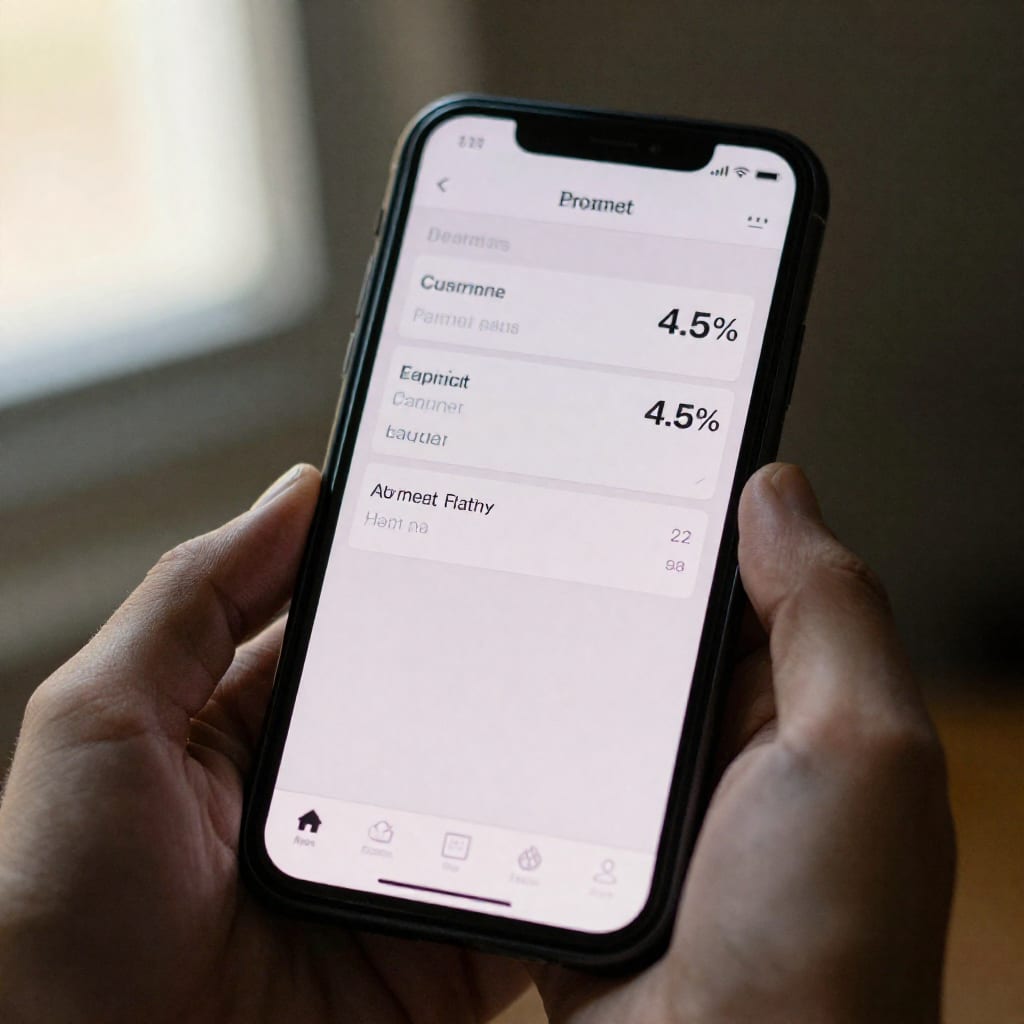
Opening a high-yield account is simpler than most people imagine. The entire process takes 10-15 minutes online and requires your ID and Social Security number. Here's how to do it right.
Step 1: Decide on bank type. Ask yourself: Do I want maximum APY and don't mind online-only banking? Choose an online bank. Do I want some branch access and can accept slightly lower rates? Choose an online division of a traditional bank or a credit union. This decision determines everything that follows.
Step 2: Verify FDIC insurance. Go to the bank's website and look for the FDIC logo on the savings page. If you don't see it, don't open an account. Alternatively, use the FDIC's BankFind tool (fdic.gov) to search the bank by name. If it's not listed, it's not covered. This is non-negotiable.
Step 3: Read recent reviews, especially about rate cuts. Spend 10-15 minutes on Reddit's r/personalfinance or Bankrate.com. Search for that specific bank's name. Read comments about how quickly they cut rates in 2023-2024 and how customers felt about the process. Pay more attention to complaints about rate cuts than praise for current rates; current rates will change.
Step 4: Open the account online. You'll provide your ID (upload a driver's license photo), Social Security number, and initial deposit source (your current bank account). The account opens immediately. Your initial transfer from your old bank takes 1-3 business days.
Step 5: Set a calendar reminder for 12 months. On that date, spend 15 minutes reviewing whether your bank's rate is still competitive. If it is, do nothing. If rates have moved significantly elsewhere (you're now 1% below the best available), initiate a transfer to a bank with better rates. Then set another 12-month reminder. You've now set up a system that keeps your money earning well with minimal effort.
The Real Takeaway: Let Your Money Work
High-yield savings accounts are one of the few financial moves that reward you for doing almost nothing. You don't need to invest, take risk, or master complex strategies. You just move money from one safe place to another and watch your interest earnings triple or quadruple. The catch—if you can call it that—is that rates move with the market, and you need to check in once a year to make sure your bank isn't falling behind.
That $2,250 per year I gained by switching accounts isn't flashy. It's not a windfall or a get-rich-quick move. But it's real. It's money I didn't have to earn through work; it just appeared because my savings earned their way. Over a decade, that $2,250 annual difference becomes $22,500 plus compound interest. That's a significant opportunity cost of staying in a 0.01% account.
If you're reading this and still keeping cash in a traditional savings account earning nothing, you're leaving money on the table. If you know someone in that situation, send them this article. The move takes 15 minutes and pays dividends for years. Worth bookmarking before you start your search.